
Psychological Assessment for Children, Clear Answers, Practical Next Steps
A psychological assessment is the most complete way to understand how your child thinks, learns, feels and behaves. Families usually arrive holding a question that has resisted every casual answer: Why is school so hard for a child this bright? Is this ADHD, anxiety, or something else entirely? Is my child ready for formal school? The last clinic gave us a label in twenty minutes was it right? What support does my child actually need?
An assessment replaces guessing with evidence. Instead of opinions the school’s, the relatives’, the internet’s you get standardised measurement of your child against thousands of children their age, interpreted by a clinician, integrated with your child’s real history, and delivered as a plain-language report with a plan. For many families it is the single most clarifying event in their child’s early years: years of confusion reorganised into one coherent explanation.
Assessments here are conducted by Umme Habiba clinical psychologist (MS Clinical Psychology, Riphah; MSc Applied Psychology, BZU) and special educator (Master in Special Education, AIOU), assessing children and writing school-usable reports since 2018. The dual profile matters most at exactly this service: most assessors can produce scores; the value is a report that tells a school what to do on Monday.
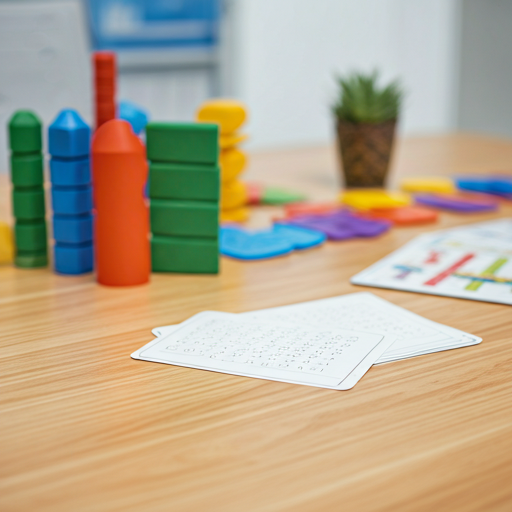
A child psychological assessment is a structured evaluation combining parent interviews, developmental history, standardised tests and behavioural observation to understand a child’s cognitive ability, learning profile, emotional wellbeing and behaviour. It results in a written report containing findings, any applicable diagnosis, and specific recommendations for home and school. It is often the essential first step before choosing the right therapy, school support or educational placement.
What is a psychological assessment for a child?
What an Assessment Can Cover
Domain
Answers Questions Like
Cognitive / intellectual
How does my child reason and solve problems? Where are the strengths? Is the school’s “weak student” verdict even accurate?
Developmental
Are milestones, play and skills on track for their age? Should anything be monitored or acted on?
Academic / learning
Is dyslexia, dysgraphia or dyscalculia behind the school struggle? Full pathway: Learning Difficulties
Attention & executive function
Is this ADHD or anxiety, sleep, or a learning gap wearing ADHD’s mask? Full pathway: ADHD Assessment
Social communication
Should autism be formally evaluated? Full pathway: Autism Assessment
Emotional & behavioural
How much are worry, mood or behaviour patterns driving the whole picture?
School readiness
Is my child ready for formal schooling and if not yet, ready in what, by when?
Every assessment is tailored to the referral question you are never sold a bundle your child doesn’t need. Focused single-question pathways exist for autism, ADHD and learning difficulties; this comprehensive assessment is the right choice when the picture is complex or unclear, when several explanations compete, when a second opinion is wanted, or when a school-placement decision needs a full profile behind it.
The Process, Step by Step
1
Free intro call
Your question, and an honest answer to whether an assessment (and which one) will actually answer it. Sometimes the honest answer is "not yet" or "a smaller one" you'll be told.
2
Parent intake session
Full developmental, medical, family, language and schooling history. This hour routinely surfaces the clue that reframes everything.
3
Testing sessions with your child
Standardised, child-friendly, usually 1–3 sessions depending on scope, always child-paced with breaks. Children generally experience the tasks as puzzles and games; most engage happily, including children who arrived braced for an exam.
4
School input
Teacher questionnaires and report review, with your permission. A child seen through home and school eyes is measured twice as accurately.
5
Scoring, integration and report writing
Numbers are the raw material, not the product. The product is the explanation: findings in plain language, strengths documented alongside difficulties, and any diagnosis given honestly including the honest "no diagnosis," which is itself an answer many families need.
6
Feedback session
The report walked through with you, question by question, until it's fully yours. You leave knowing exactly what to do next and the report is written so you can keep using it after you leave.
A dual-qualified assessor
Clinical psychology finds the explanation; special education converts it into classroom practice. The recommendations section is written by someone who has implemented such recommendations, not just prescribed them.
Honest scoping
The assessment answers your question at the smallest sufficient scope families are told when a focused assessment will do, and when "wait and monitor" is genuinely the right advice.
Bilingual sensitivity
English-medium school + Urdu-speaking home is Pakistan's normal; testing and interpretation account for it explicitly, so language background is never mistaken for disorder.
Second opinions welcomed
Existing reports from any clinic in Pakistan or abroad are reviewed respectfully; sometimes the original conclusion is confirmed and explained properly at last, sometimes the picture genuinely changes. Either outcome serves the child.
Differential thinking.
The hardest part of child assessment is that everything imitates everything: ADHD, anxiety, learning difficulties, sleep problems and language gaps can all produce an inattentive, underperforming, frustrated child. Distinguishing them is precisely what standardised, integrated assessment exists to do and precisely what a twenty-minute opinion cannot.
What Makes This Assessment Different
Our Evidence-Based Approach
Cognitive Testing (IQ)
Utilizing gold-standard WISC and WPPSI batteries to measure processing speed, verbal comprehension, and fluid reasoning.
Personality Inventories
Validated psychometric tools to understand emotional regulation, temperament, and social-emotional development.
Clinical Observation
Direct, non-intrusive observation in a safe, play-based environment to assess real-world behavior and interactions.
In Lahore, Across Pakistan, and for Overseas Families
Intake, history, questionnaires, report feedback and school coordination all run online families consult from every major city in Pakistan. Standardised child testing requires in-person sessions, so out-of-city families consolidate testing into one well-planned Lahore visit, with everything else handled remotely around it. Overseas Pakistani families (UK, UAE, Saudi Arabia, USA, Canada, Australia) commonly schedule testing during a Pakistan visit intake done online before travel, feedback online after returning with reports written to be usable by international schools and, where relevant, to support accommodation requests there.
After the Assessment
The report is a map, and maps are for travelling. Depending on findings, next steps might include therapy in-practice (→ Child Behavioural Therapy · Anxiety Counselling · Emotional Regulation · ABA Therapy), parent coaching (→ Parent Counselling), a school meeting armed with concrete accommodations, structured re-assessment at an agreed interval to track development, or a coordinated referral (child psychiatry, speech-language, occupational therapy, paediatrics) with the report doing the introducing. You will not be handed scores and a goodbye.

Why Trust Umme Habiba?
Internationally Recognized
Diagnostic protocols meeting global professional standards.
Culturally Adapted
Psychometric instruments optimized for the local context.
Child-Friendly Environment
Private, comfortable clinical assessment rooms thoughtfully designed for children.
Psychological/IQ Assessment
PKR 25,000–35,000
Depends on battery
Standard Session
- Our assessment package includes all testing materials, sessions, data analysis, and the final 12-page clinical report.
Clinical Availability
Mon - Fri
09:00 AM - 06:00 PM
Saturday
10:00 AM - 04:00 PM
Fri / Sun
By Appointment Only
- Both In-Person and Online Telehealth sessions are available.
Related Assessments
Autism Assessment
Specialized ADOS-2 diagnostic pathway for developmental clarity.
ADHD Assessment
Executive function profiling and behavioral observation for attention concerns.
Learning Difficulties
Dyslexia and Dyscalculia screening to support tailored educational plans.
“The assessment was a turning point for our family. Umme Habiba didn’t just give us a label; she gave us a deep understanding of why our son was struggling and a clear path forward that worked within our school system.”
Amina R.
Mother of 8-year-old
FAQs Psychological Assessment
How long does the whole process take?
Typically 2–4 appointments over 1–3 weeks, plus the feedback session depending on scope. The written report follows within 24 hours
Will my child find it stressful?
Assessments are deliberately child-paced, with breaks, encouragement and zero exam atmosphere. The overwhelming majority of children engage comfortably, and you’ll receive simple preparation guidance beforehand (short version: call it “puzzles and games with a teacher who wants to see how you think” because that’s what it is).
Do schools accept the report?
Reports are written specifically so schools can act on them concrete accommodations and strategies, not just scores and routinely support accommodation and exam-arrangement requests.
What if the assessment finds nothing "diagnosable"?
That is still an answer often a profoundly reassuring one and the report will still explain your child’s profile, why the difficulties appeared, and how best to support them. No family leaves with “nothing.”
Can my child fail the assessment?
No. There is no pass or fail only an accurate picture. Strengths are measured and reported as carefully as difficulties.
We already have a report from another clinic start over?
Not necessarily. Bring it. Review-and-extend is often possible, faster and cheaper than repeating everything ,and previous testing has re-test interval rules that will be respected.
Can it be done fully online?
Everything except the standardised child testing, yes. Testing consolidates into one planned Lahore visit; overseas families typically align it with a Pakistan trip.
IQ testing , do you do it, and should we?
Cognitive assessment is available and often valuable as part of a question (school placement, learning difficulties, giftedness with underachievement). A bare number without a question rarely helps a child; you’ll get honest advice on whether it’s worth doing in your case.
How much does it cost?
Scope drives cost, so fees are confirmed transparently at the free intro call before anything is booked.
Start Your Child’s Journey to Clarity
Schedule an initial intake session today to discuss your concerns with Umme Habiba and Our Expert Clinical Team.