
Clinical Excellence
Autism Assessment for Children in Lahore & Across Pakistan
When you’re worried about your child, you don’t need a label, you need clarity.
Neuro-affirming, gold-standard assessments conducted in both Urdu & English to ensure your child is understood in their natural expression.
Clarity
Understanding why your child interacts with the world in their unique way.
Understanding
Moving beyond behaviors to see the underlying neuro-developmental profile.
Direction
A concrete roadmap for school support, therapy, and home strategies.
What Is an Autism Assessment?
It’s more than a checkbox. It’s a comprehensive, structured clinical evaluation designed to provide three essential things:
Meet Umme Habiba
Umme Habiba is a highly dedicated Clinical Psychologist specializing in neurodevelopmental conditions. Her approach combines rigorous clinical standards with a deep empathy for the cultural context of families in Pakistan.
MS Clinical Psychology
Riphah International University
MSc Applied Psychology
BZU Multan
Master's in Special Education
AIOU
Advanced ABA Training
Specialized Behavioral Interventionist

Social Interaction
Difficulties playing with peers or preferring solitary activities consistently.
Eye Contact
Limited or avoidant eye contact during social interactions or requests.
Language Delay
Delayed speech development or unusual patterns of speaking (echolalia).
Repetitive Movements
Hand flapping, rocking, or spinning objects repeatedly.
Intense Interests
Deeply focused obsession with specific topics or parts of objects.
Rigid Routine
Distress over small changes in daily schedules or environment.
Sensory Sensitivity
Over- or under-reaction to sounds, textures, light, or touch.
Empathy Signals
Difficulty recognizing or responding to others' emotional cues.
Unusual Play
Lining up toys or focusing on mechanics rather than imaginative play.
Early Signs of Autism
Every child is different, but these common indicators often suggest the need for a professional evaluation.
Who Is This For?
Toddlers (18m-3y)
Focus on developmental milestones, early social markers, and parent-child interaction dynamics.
- Not responding to name
- Delay in pointing
School-Age (4-12y)
Assessment of peer relationships, classroom behavior, and academic-social integration.
- Social exclusion
- Focus issues in class
Teenagers
Evaluating complex social navigation, independence skills, and emotional regulation.
- Social anxiety
- Identity & self-advocacy
The Importance of Distinction
Getting the diagnosis right is critical because the support strategies for each condition vary significantly.
Autism vs ADHD
While they overlap in executive function challenges, the root of social interaction vs attention differs. We ensure the correct intervention path.
Autism vs LD
Separating inherent learning difficulties from neuro-atypical social processing ensures your child isn’t just taught ‘more’ but ‘differently’.
Your Assessment Journey
A transparent, evidence-based process designed for thoroughness and family comfort.
1
Initial Intake
We begin with an unhurried conversation about your concerns, your child's developmental history, and what you're hoping to understand. This is also where I answer your questions and make sure an assessment is genuinely the right step.
2
Direct Assessment
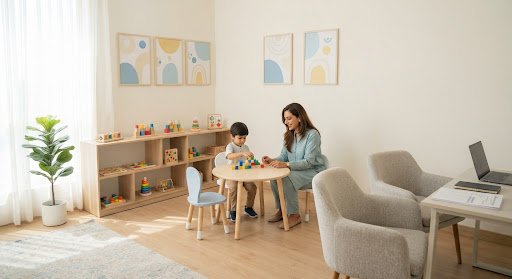
Using internationally recognised, play-based and structured methods, I observe your child directly. For younger children this often looks like guided play; the aim is for your child to feel relaxed and to show me who they really are.
3
Review & Analysis
I bring together everything observations, developmental history, and information from home and (where relevant) school and analyse it against established diagnostic criteria. Careful analysis is what separates a reliable assessment from a rushed opinion.
4
Feedback & Report
We sit down together so I can explain the findings clearly and answer your questions. You receive a comprehensive written report with practical, personalised recommendations you can take to school and use at home.
Parents receive a comprehensive, high-quality written report including practical recommendations for school and home support.
Scientific Accuracy & Clinical Rigor
We utilize globally recognized assessment instruments that provide the highest level of diagnostic accuracy.
- ADOS-2 Certified
- ADI-R Interview
- Adaptive Scales
- Clinical Judgment
Why Early Assessment Matters
- School Accommodations: Official documentation required for tailored IEPs and classroom support.
- Family Stress Reduction: Understanding the "why" reduces parent frustration and guilt.
- Skill Building: Targeted therapy like ABA can begin immediately with the right focus.
Scientific Accuracy & Clinical Rigor
We utilize globally recognized assessment instruments that provide the highest level of diagnostic accuracy.
- Faisalabad
- Pindi / Islamabad
- Multan
- UAE / USA / UK
Initial Consultation
Clinical screening to determine if full assessment is necessary.
MOST REQUESTED
Comprehensive Assessment
Full diagnostic battery including ADOS-2, home/school reports, and final clinical diagnosis.
The Roadmap Package
Complete Assessment PLUS 3 sessions of Parent Guidance & School IEP strategy.
Service Packages
After years of searching for answers and visiting multiple doctors, Umme Habiba provided the clarity we desperately needed. She didn't just give us a report; she gave us a way forward for our son.
Mrs. Faraz
Lahore, Pakistan
Transparent Pricing
Standard Assessment Session
PKR 45,000–55,000/ session
Range OK: “from Rs. 45,000, confirmed after intake
Individualized One-on-One Care
- Full Clinical Documentation
- Personalized Home Activity Plan
- Direct WhatsApp Support Access
Evidence-Based Assessment Tools
An assessment is only as trustworthy as the methods behind it. I use internationally recognised, gold-standard tools rather than opinion alone.
ADOS-2
A semi-structured, play-based observation widely regarded as the international gold standard for observing social communication and behaviour directly.
ADI-R
A detailed, structured developmental interview with parents that builds a full picture of your child's history.
Standardised developmental and cognitive measures
Used where relevant to understand your child's wider profile of strengths and needs.
Multidisciplinary judgement
Observations across settings, combined with clinical expertise, so the conclusion reflects your whole child, not a single moment.
Importantly, autism is diagnosed through careful behavioural and developmental assessment not through blood tests or scans. The quality of the clinician’s observation and analysis is everything, which is why the tools above, in experienced hands, matter so much.
Parent Guidance and Support
A diagnosis is the beginning of understanding, not the end of the conversation. Many parents feel a mix of relief and overwhelm afterwards that’s completely normal, and you don’t have to navigate it alone.
Alongside assessment, I offer parent guidance to help you:
- Understand your child’s specific profile and what it means day to day
- Respond to meltdowns, sensory needs, and communication differences with more confidence
- Set up routines and environments that help your child feel calm and capable
- Talk to family members and schools, and handle stigma with clarity
- Look after your own wellbeing, so you can keep showing up for your child
Supporting an autistic child is a partnership, and my aim is for you to feel equipped and steadied not lectured.

Online Autism Assessment Across Pakistan
You shouldn’t have to live in Lahore to get a careful, expert assessment. Families across Pakistan often travel for hours to reach a specialist, or go without support entirely. Secure online sessions change that.
Through video sessions in Urdu and English, I work with families in Faisalabad, Rawalpindi and Islamabad, Multan, Gujranwala, Sialkot, Bahawalpur, Sargodha and beyond. The detailed developmental interview and much of the assessment process translate well online, and I’ll be transparent with you about which elements are best completed in person and how we can arrange that when needed.
Wherever you are in Pakistan, the standard is the same: gold-standard tools, an honest process, and a report your child’s school will understand.
Autism Assessment for Overseas Pakistani Families
For Pakistani families living in the UK, USA, Canada, UAE, Saudi Arabia, Australia and elsewhere, getting a culturally-attuned assessment can be genuinely difficult. Long waiting lists, high costs, and clinicians who don’t share your language or cultural context can leave families stuck.
I offer online autism assessments and parent guidance for overseas Pakistani and South Asian families combining internationally recognised methods with an understanding of your family’s culture, language, and values. Sessions run in Urdu and English, at times that work across time zones, and you receive a professional written report you can use to access support where you live.
You get the clarity of an expert who understands both the clinical picture and your family without the wait.
Wondering about ADHD in adults? Umme Habiba’s practice focuses on children and adolescents; contact us and we’ll point you to appropriate adult services.
In-Person Clinics
Lahore
Online Sessions
Available Worldwide
Frequently Asked Questions
What is an autism assessment?
An autism assessment is a structured clinical evaluation that combines a detailed developmental history, direct observation using standardised tools, and information about how your child functions across settings, to determine whether they meet the criteria for Autism Spectrum Disorder and to map their individual strengths and needs.
What are the signs of autism?
Common signs include differences in social interaction and communication, limited eye contact, delayed or unusual language, repetitive movements or speech, intense focused interests, a strong need for routine, and heightened or reduced sensitivity to sound, light, or touch. Several signs appearing together are more meaningful than any one alone.
What age can autism be assessed?
Autism can be reliably assessed from around 18–24 months, and there is no upper limit many children, and even teenagers, are assessed when the demands of school make their difficulties clearer. Earlier assessment allows earlier support, but it is never too late to seek understanding.
How long does an autism assessment take?
A comprehensive assessment usually involves 3–6 hours of direct time, often spread across more than one session so your child doesn’t become tired and can show their true abilities. You then receive a detailed written report.
Can autism be assessed online?
Much of the assessment including the in-depth parent interview works very well online, and I offer secure video sessions across Pakistan and overseas. I’ll always be transparent about which elements are best completed in person and how we can arrange that when needed.
Do I need a doctor's referral?
No referral is required. You can book a consultation directly, and we’ll start with a conversation about your concerns.
Will the report help with school accommodations?
Yes. The report is written to be clear and practical for schools, with specific recommendations teachers can act on — so your child gets the right support in the classroom.
Is autism curable?
No, and any provider promising a “cure” should be treated with real caution. Autism is a lifelong difference in how a person experiences the world. With understanding and the right support, autistic children can and do thrive as themselves.
What is the difference between autism and ADHD?
Autism mainly affects social communication, sensory processing, and a need for routine, while ADHD mainly affects attention, impulse control, and activity levels. They can look similar, they can occur together, and a careful assessment distinguishes them by understanding why a behaviour is happening.
Related Services
Child Behavioural Therapy
Evidence-based interventions for managing emotional regulation.
Parent Counselling
Support for caregivers navigating neurodiversity at home.
Learning Difficulties
Screening and support for Dyslexia, ADHD, and other profiles.
Your Child Deserves to Feel Understood
Take the first step toward clarity. Book an initial consultation today.
Note: This clinic does not provide emergency crisis intervention. If your child is in immediate danger, please visit your nearest hospital emergency department.