
Why the toddler years are considered a critical window for ABA therapy for toddlers, what early intervention actually looks like, and how to know if your toddler needs an assessment.If your toddler has recently been flagged for a developmental concern whether by a paediatrician, a daycare teacher, or your own instinct you’ve likely heard some version of “early intervention matters.” This guide explains specifically why, what early ABA therapy actually looks like for a toddler (as opposed to an older child), and what to realistically expect if you’re considering it.
Why the Toddler Years Are Different
Between roughly ages 1 and 5, a child’s brain is undergoing an extraordinary rate of development forming new neural connections faster than at almost any other point in life. This period of high “neuroplasticity” means the brain is especially responsive to new learning experiences, which is part of why intervention started during this window tends to show stronger, more durable outcomes across communication, social, and cognitive development than the same intervention started later.
This doesn’t mean older children can’t make meaningful progress they absolutely can, and “too late” is essentially never an accurate description of a child’s situation. But it does mean that if a concern is identified early, there’s a genuine clinical rationale for not waiting to act on it.
What Early ABA Therapy Actually Looks Like for a Toddler
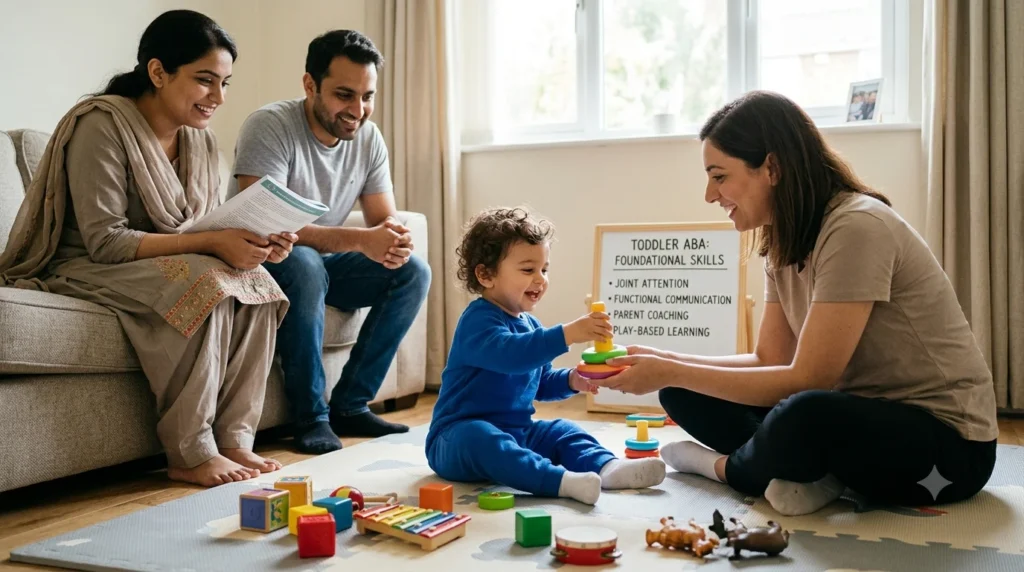
Therapy for a 2 or 3-year-old looks quite different from a program designed for a school-aged child. It’s typically:
- Heavily play-based. Most sessions happen through toys, songs, movement, and interactive games rather than structured tabletop work, since this matches how toddlers naturally learn and stay engaged.
- Focused on foundational skills. Common early goals include joint attention (sharing focus on something with another person), imitation, functional communication (requesting, protesting appropriately), following simple instructions, and tolerating brief separations or transitions.
- Heavily parent-involved. Because toddlers spend so much of their time with family rather than in structured settings, effective early programs place significant emphasis on coaching parents directly, so strategies extend well beyond the therapy session itself.
- Delivered in shorter, more frequent sessions. Toddlers typically have shorter attention spans, so many early programs use shorter, more frequent sessions rather than long, single blocks of therapy.
Common Signs That Lead to an Early Assessment
Many toddlers are referred for an assessment based on patterns like:
- Not yet using words, or very few words, by around 18 months to 2 years
- Not responding consistently when their name is called
- Limited pointing, showing, or bringing objects to share interest with a parent
- Repetitive movements hand-flapping, spinning, lining up toys repeatedly
- Strong distress with minor changes to routine
- Limited interest in other children or in social games like peekaboo
- Loss of previously acquired words or skills (this specific pattern regression always warrants a prompt evaluation)
A single sign in isolation isn’t necessarily concerning; a cluster of these signs, especially combined with parental instinct that something feels different, is what typically warrants a proper evaluation.
“But He’s Just a Late Talker” Addressing a Common Hesitation
One of the most common reasons families delay seeking an assessment is the belief often reinforced by well-meaning relatives that a toddler will simply “grow out of it,” especially boys, who are sometimes assumed to talk later than girls as a general rule. While there is real variation in typical development, and plenty of toddlers do catch up on their own, the safest approach is a professional evaluation rather than a guess, precisely because catching a genuine developmental concern early carries such a meaningful advantage and if the evaluation shows your child is simply on the later end of typical, that’s valuable, reassuring information too.
What an Early Assessment Actually Involves
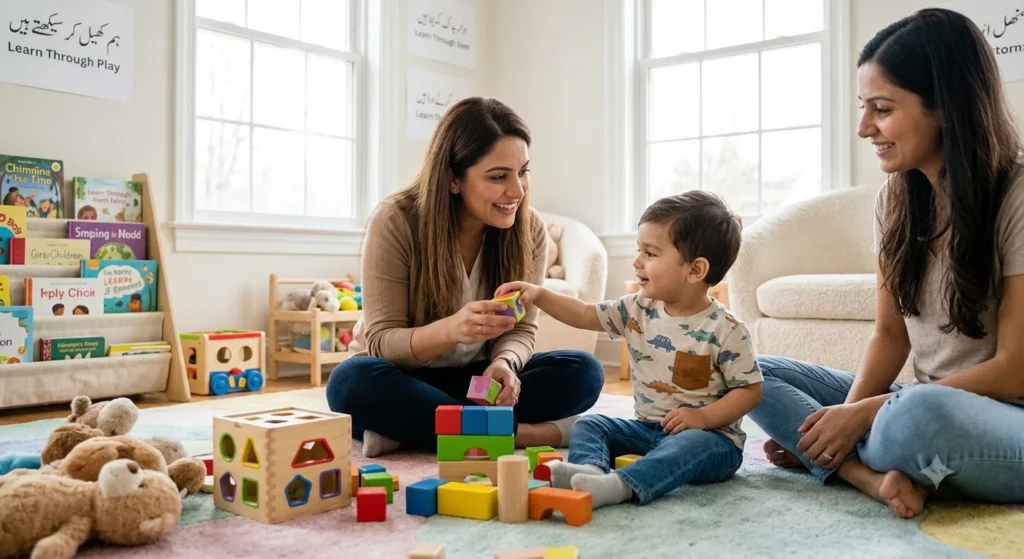
A proper toddler assessment typically includes:
- A detailed conversation with parents about developmental history and current concerns
- Direct, structured observation of the child, often using standardised developmental tools appropriate for toddlers
- Observation of parent-child interaction, since a toddler’s behaviour and communication with a trusted caregiver often reveals more than behaviour with an unfamiliar clinician alone
- A clear written report outlining findings and specific recommendations
What Happens If ABA Therapy Is Recommended
If ABA therapy is recommended for your toddler, a good program will start with:
- A functional assessment identifying your child’s specific current skills, communication style, and any challenging behaviours
- Individualised goals appropriate to your toddler’s developmental level, not a generic template
- A clear plan for parent coaching alongside direct sessions
- A defined schedule for reviewing progress and adjusting goals as your toddler develops toddlers change quickly, and a good program adapts alongside them
Balancing Early Intervention With a Toddler’s Needs
It’s worth being clear: early intervention doesn’t mean maximum intensity is always right for every toddler. A good clinician will recommend an intensity and format that matches your specific child’s tolerance, temperament, and your family’s capacity to be consistently involved not simply “as many hours as possible,” which can occasionally overwhelm a very young child rather than help them.
For Overseas Pakistani Families With a Toddler
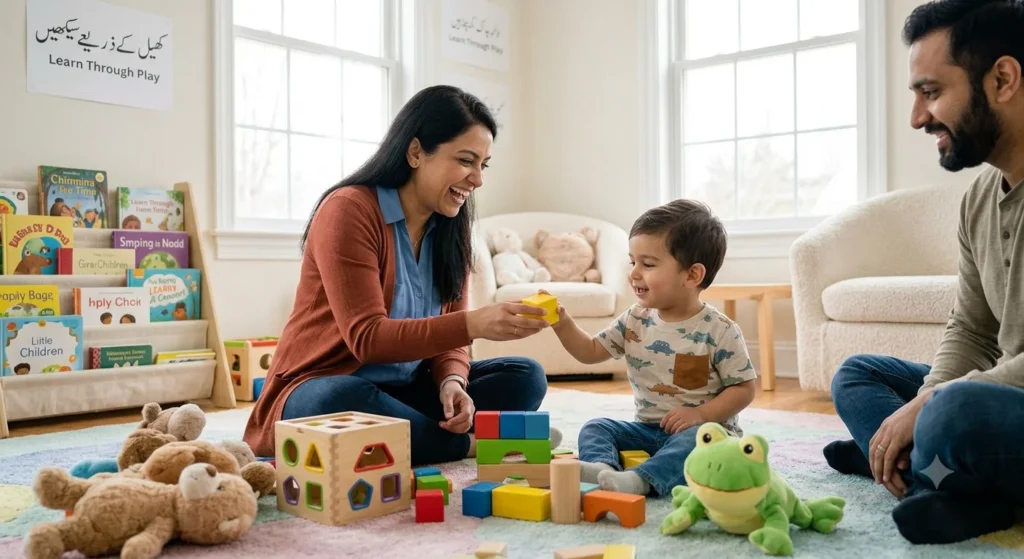
If you’re based in the UK, USA, Canada, UAE, Saudi Arabia, or Australia and have concerns about your toddler, local waitlists for developmental assessments can sometimes stretch for many months. An online assessment and consultation with a clinician who understands both the developmental science and your family’s cultural and linguistic context can be a genuinely useful way to get clarity sooner, with a clear path forward including guidance on what to pursue locally alongside any recommendations from the assessment.
The Bottom Line
If you have a genuine, persistent concern about your toddler’s development, the single most useful thing you can do is seek a proper assessment sooner rather than later not because every delay causes harm, but because the toddler years offer a genuine window where early, well-matched support tends to have an outsized impact. Trusting your instinct enough to ask the question is never something to feel guilty about.