
A practical, ABA-informed guide to understanding and aba therapy reduce meltdowns and tantrums at home, including the crucial difference between the two and why it changes your response.
Few things exhaust parents more than repeated meltdowns the screaming in a public market, the collapse on the floor at bedtime, the hitting when a favourite show ends. This guide breaks down what’s actually happening during these moments through an ABA lens, why the difference between a “tantrum” and a “meltdown” genuinely matters, and specific, practical strategies you can start using at home.
Meltdown or Tantrum? The Distinction Matters
These words are often used interchangeably, but they describe genuinely different things, and responding to one as if it’s the other rarely works.

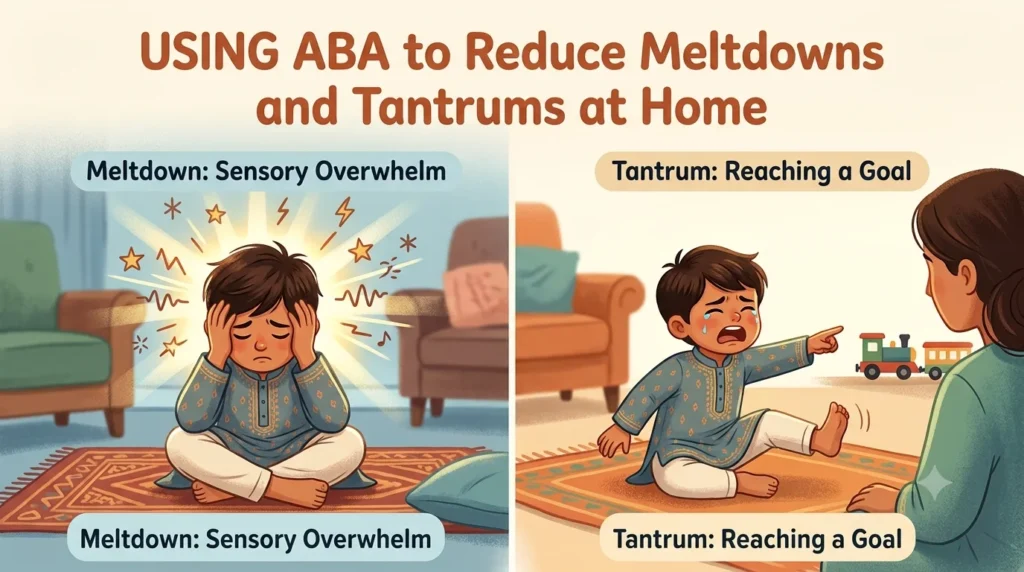
A tantrum is typically a goal-directed behaviour a child wants something (an item, attention, to avoid a task) and is using an intense behaviour to try to get it. A tantrum usually responds, at least partially, to the surrounding environment for example, it may pause briefly if a parent almost gives in, or if something distracting happens.
A meltdown is an involuntary response to being overwhelmed sensory overload, extreme frustration, or exhaustion where the child has genuinely lost the capacity to regulate in that moment. A meltdown isn’t goal directed in the same way, and it typically doesn’t respond to negotiation, bargaining, or “consequences” in the moment, because the child isn’t operating from a place of strategic choice they’re in genuine distress.
Many children experience both at different times, and telling them apart is one of the most useful skills a parent can develop, because the effective response is quite different for each.
Responding to a Tantrum
Since a tantrum is functionally trying to achieve something, the ABA informed response focuses on not reinforcing the tantrum itself, while consistently reinforcing a better way to communicate the same need:
- Stay calm and avoid giving in to the specific demand while the tantrum is happening, if that demand isn’t reasonable to grant
- Once your child is calm, or even during a brief calm moment within the tantrum, prompt and reinforce an appropriate way to ask for what they wanted
- Be consistent an intermittent “give in sometimes” pattern tends to make tantrums more persistent over time, not less, because the child learns the strategy sometimes works, which is worth trying harder for
- Reinforce, specifically and warmly, moments when your child asks appropriately instead of escalating, even outside of a tantrum situation, so the alternative behaviour is consistently strengthened
Responding to aba therapy reduce meltdowns
Since a meltdown reflects genuine overwhelm rather than a strategic bid for something, the response is fundamentally different:
- Reduce demands and sensory input where possible dim lights, lower noise, remove an audience if you can
- Stay calm and present without trying to reason, negotiate, or teach in the moment a meltdown is not a teaching opportunity, it’s a moment requiring co-regulation and safety
- Keep your own voice and body language calm; a child in a meltdown often mirrors the emotional intensity around them
- Wait for the meltdown to pass before addressing anything else trying to extract a lesson or consequence mid-meltdown is rarely effective and can prolong the distress
- Afterward, once truly calm, gently talk through what happened in simple, non-blaming language, and identify what might help earlier next time
Identifying Triggers: The Real Long-Term Solution
Reducing meltdowns and tantrums over time is far more effective than managing each one individually in the moment. This means identifying patterns:
- Time of day many children are more prone to dysregulation when tired, hungry, or transitioning between activities
- Sensory environment noise, crowds, bright lights, or unexpected touch
- Specific demands certain tasks, especially ones a child finds difficult or unpleasant
- Communication frustration moments where a child has something they want to express but lacks the words or means to do so
- Unexpected changes a broken routine, a cancelled plan, an unfamiliar person or place
Keeping a simple log for a couple of weeks noting time, setting, what happened right before, and what happened during often reveals patterns that aren’t obvious day to day, and this information is genuinely useful to bring to your child’s ABA therapist.
Prevention Is More Effective Than Reaction
Some of the most effective strategies happen before a meltdown or tantrum even starts:
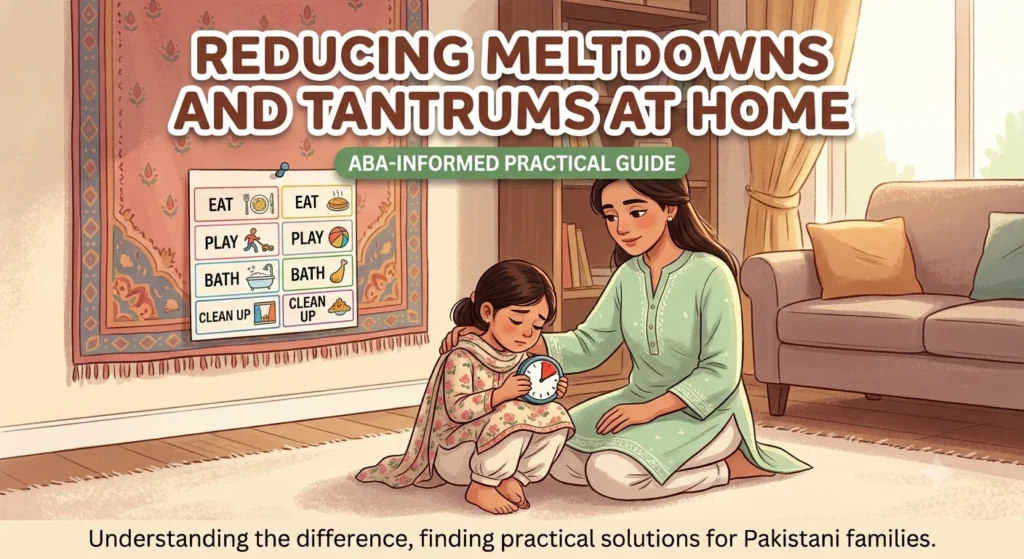
- Build in warnings before transitions, ideally with a visual timer, so changes feel predictable rather than sudden
- Watch for early warning signs increased fidgeting, quieter or louder vocalisation, covering ears and intervene early with a break or a change of pace, rather than waiting until full escalation
- Teach a functional replacement early, when your child is calm, not in the middle of a difficult moment practicing “I need a break” using words, a card, or a gesture works far better when introduced during a calm teaching moment first
- Build predictable routines where possible, especially around known difficult transitions like bedtime or leaving the house
What Not to Do
- Avoid escalating your own tone or volume to match the intensity of the moment this rarely helps and often makes things worse
- Avoid inconsistent responses giving in sometimes and holding firm other times tends to prolong the pattern
- Avoid extensive reasoning or lecturing during an active meltdown save the conversation for afterward, when your child can genuinely process it
- Avoid public shaming or comparing your child’s behaviour to siblings or other children, particularly in front of extended family, which adds shame without addressing the underlying need
Involving Your ABA Therapist
If meltdowns or tantrums are frequent, intense, or not improving despite consistent effort at home, bring specific examples including patterns from a behaviour log if you’ve kept one to your child’s ABA therapist. A functional behaviour assessment can identify the specific triggers and functions behind your child’s particular pattern, which allows for a targeted plan rather than general advice alone.
A Note on Extended Family and Public Settings
Meltdowns in front of extended family or in public are genuinely difficult, and Pakistani households often carry real social pressure around a child’s behaviour being seen and judged. It’s worth having a brief, direct conversation with close family members about what your child needs in these moments (space, calm, no added commentary) so you’re not managing both your child’s distress and unhelpful reactions from others at the same time.
Reducing meltdowns and tantrums isn’t about finding one perfect response in the moment it’s about consistently responding to each type appropriately, identifying and reducing triggers over time, and proactively teaching better ways to communicate and cope. Progress is usually gradual, but it is genuinely achievable with a consistent, informed approach.