
Accepting KSA Clients Across Riyadh, Jeddah, Al Khobar & Eastern Province
Online Psychology Services for Pakistani and Indian Families in Saudi Arabia
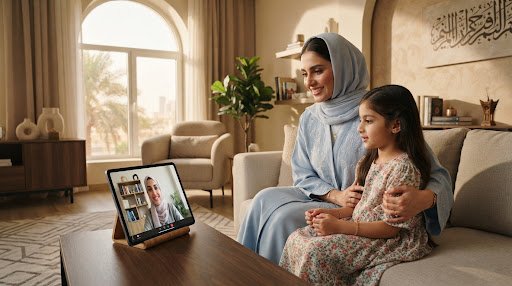
Pakistani and Indian families have lived and worked in Saudi Arabia for decades, in Riyadh, Jeddah, Dammam, Al Khobar, Makkah, Madinah and many other cities. Some children are born and raised there. Others arrive when a parent takes up a new job. Family life is often shaped by long working hours, international schools and close ties to relatives back home. When a child is struggling, it can be hard to find support that fits the family’s language, culture and situation.Umme Habiba is a clinical psychologist based in Lahore, Pakistan, who works with children, adolescents and their parents. Through online sessions on Google Meet, she offers parent guidance, counselling and therapy to Pakistani and Indian families living in Saudi Arabia. Sessions are in Urdu and English. These are online services provided from Pakistan. There is no clinic in Saudi Arabia. Umme Habiba’s only clinic is at House 397-B, Faisal Town, Lahore.
- Zero Waitlists
- Urdu & English Sessions
- Confidential & Culturally Attuned Care
Accredited Telehealth Standard
Certified Clinical Tele-Care | KSA Expat Friendly
Arabia Standard Time (AST)
Convenient afternoon & evening slots aligned with Riyadh & Jeddah school & work hours
Bilingual Sessions
Fluent in Urdu, Punjabi & English for seamless cross-generational comfort
100% Confidential & Secure
Encrypted private HD clinical video room. No third-party data access
International School Support
Clinical reports & strategies for KSA International (British, IB, American & FBISE) schools
Who this service is for
This service is for parents and caregivers of children and adolescents living in Saudi Arabia, including:
Families who want to discuss their child in Urdu, or in a mix of Urdu and English
Parents whose child's school has raised a concern and who want to understand it before acting
Families where the father works in Saudi Arabia while the mother and children live in Pakistan or elsewhere, or where a parent is often away
Families who want guidance that fits their faith, values and family structure
Parents who may be able to arrange an in-person assessment during a visit to Pakistan
The practice doesn’t work with adults as individual clients. Parents are seen in their role as parents, in relation to their child’s needs.
Concerns families in Saudi Arabia often bring
School and learning
Many Pakistani and Indian children in Saudi Arabia attend community schools following Pakistani or Indian curricula, or international schools following British, American or other curricula. Children who move between systems, or between Saudi Arabia and Pakistan, may develop gaps in reading, writing or maths, or struggle with a different language of instruction. When a teacher raises a concern, parents often want to understand whether their child has a learning difficulty, an attention difficulty, or simply needs to catch up.
Attention and behaviour
Restlessness, poor concentration, forgetfulness, defiance and meltdowns are common reasons families get in touch. Parent guidance can help you understand what may be behind your child's behaviour, and respond more consistently at home.
Limited space and outdoor time
In some cities, families spend long periods indoors, especially during the hottest months, and children may have limited space for physical activity. This can affect sleep, energy, mood and screen use. It doesn't cause psychological difficulties, but it can make them harder to manage. Practical routines and activity plans can help.
A parent working away
In many families, one parent works in Saudi Arabia while the other lives with the children in Pakistan, or a parent is away for extended periods. Children may miss the absent parent, and the parent at home may carry most of the pressure. Online sessions allow both parents to join, even from different countries, and agree on how to support their child.
Moving between countries
Some families expect to return to Pakistan or India, or to move elsewhere, at some point. Uncertainty about the future, changing schools and saying goodbye to friends can affect children, sometimes showing up as anxiety, clinginess or behaviour changes. Understanding these reactions helps parents support their child through transitions.
Anxiety and pressure
Worry about exams, friendships, family changes or the future can affect children and teenagers. Some become perfectionistic, irritable or reluctant to go to school. Anxiety counselling can help young people manage worry, and help parents respond in ways that build confidence.
Developmental concerns and diagnoses
Parents may be unsure whether their child's speech, play or social development is on track, or may have received a report they want to understand. Guidance in Urdu or English can help families make sense of what they've been told and plan next steps.
What online support can include
Depending on your child’s needs, online sessions may include:
Parent counselling
Guidance on behaviour, routines, school, screens and siblings, and on parenting a child with additional needs.
Interactive Digital Tools
Child anxiety counselling
For worry, school avoidance, separation difficulties and exam stress.
Child-Led Gentle Care
Emotional regulation
Help with meltdowns and anger, with parent coaching. For some adolescents, this may include DBT-informed skills.
Standardized Clinical Tools
Child behavioural therapy
Much of which is delivered through parent coaching.
Urdu & English Consults
Family therapy
Including sessions where a parent joins from another country.
Urdu & English Consults
ABA parent coaching
for parents of autistic children.
Urdu & English Consults
Counselling, parent guidance and many therapy sessions work well online. Some formal assessments can’t be completed online. Standardised observation for autism, such as the ADOS-2, and cognitive testing such as the WISC or WPPSI need to be carried out face to face, at the clinic in Lahore. Parent interviews, review of existing reports and feedback can often be done online.
What can and can't be done online
Planning an assessment during a visit to Pakistan
Many families travel to Pakistan during school holidays, Eid or annual leave. If an in-person assessment would help, it may be possible to plan it around your visit:
1
Before you travel
Initial parent consultation to evaluate developmental history, family goals, and KSA school context.
2
During your visit
The in-person parts of the assessment at the clinic in Faisal Town, Lahore.
3
After you return
Online feedback and a written report.
4
Review
Regular progress check-ins, targeted adjustments, and learning support documentation as needed.
Please contact us well before your travel dates, since availability can’t be guaranteed. The length of the assessment depends on your child’s needs.A report prepared in Pakistan may not be accepted by schools or authorities in Saudi Arabia. Please read the section below.
Language, culture and family
Sessions are in Urdu and English. Indian families are warmly welcome. If you’d prefer another language, please mention it when you get in touch, so we can tell you honestly whether sessions will work for you.
Faith, family values, respect for elders and the role of relatives in Pakistan or India are all treated as part of your child’s world. Sessions aim to find an approach that fits your family, not to impose one.
Important information about online services from abroad
Umme Habiba practises as a clinical psychologist in Pakistan. She is not licensed by the Saudi Commission for Health Specialties or any other Saudi authority. The rules on receiving psychological services from a professional based outside Saudi Arabia may depend on your circumstances. Before booking, we’ll discuss your situation and what you’re looking for, so you can decide whether this service is appropriate for you. If a local service would be more suitable, we’ll tell you.
Privacy and online sessions
Sessions take place on Google Meet. For privacy:
- Choose a quiet room where you won’t be overheard
- Use headphones if others are nearby
- Give a teenager their own private space for their part of the session
What you share is confidential, within the limits described in the Privacy Policy. Information is shared with a school or other professional only with your written consent.
How online sessions work
1
Get in touch
By WhatsApp or email with your concern, your child's age and your city.
2
Initial conversation
To understand what you're looking for.
3
First consultation
Via Google Meet with one or both parents.
4
An agreed plan
Parent sessions, sessions with your child or teenager, family sessions, or a combination.
5
Regular review
With changes if something isn't working.
Fees are discussed during the booking process.
Scheduling from Saudi Arabia
Accessible, world-class telehealth tailored directly to KSA time zones with seamless international payment options.
Virtual Consultation
260 SAR / session
Standard 50-Minute Clinical Video Session
- 100% encrypted secure clinical link
- KSA Mada, Debit/Credit cards & Apple Pay accepted
- Post-session action plan & school learning support notes
- Bilingual support (Urdu for parents / English for youth)
Transparent Care
KSA Telehealth Hours
- Dedicated slots aligned with Riyadh & Jeddah school and work hours
Slots Open
Arabia Standard Time (AST)
Riyadh, Jeddah & Eastern Province Evenings
09:00 AM – 06:00 PM AST
Sunday through Thursday
Weekend Family Slots
Friday & Saturday Family Sessions
07:00 AM – 06:00 PM AST
Pre-booked sessions
- Available to families across Riyadh, Jeddah, Dammam, Al Khobar, Jubail, and all provinces.
- Confidential • High-Definition Video • No Special App Installation Required
Working alongside services in Saudi Arabia
Online sessions from Pakistan don’t replace services in Saudi Arabia. They can sit alongside them.
Schools
Schools vary widely in the learning support they offer. Some international and community schools have learning support staff; others have limited provision. Some schools may require an assessment from a professional licensed in Saudi Arabia before providing certain support. Please check with your child's school before relying on a report from Pakistan.
Health services and medication
Umme Habiba doesn't prescribe medication. If medication might be worth considering, your child would need to see a doctor licensed in Saudi Arabia. With your written consent, relevant information can be shared with them.
When local support is needed
If your child needs frequent face-to-face therapy, or services such as speech and language therapy or occupational therapy, you may be advised to find support locally. Umme Habiba can continue to support you as parents alongside that care where appropriate.
Language, culture and family
Sessions are in Urdu and English. Indian families are warmly welcome. If you'd prefer another language, please mention it when you get in touch, so we can tell you honestly whether sessions will work for you.
Faith, family values, respect for elders and the role of relatives in Pakistan or India are all treated as part of your child’s world. Sessions aim to find an approach that fits your family, not to impose one.
“Finding a child psychologist in Riyadh who truly understands both the international school environment and our Pakistani cultural values felt impossible until we consulted Umme Habiba. The change in our daughter’s confidence and our household harmony has been life-changing.”
Tariq & Humaira M. - Parents of 9-year-old • Al Nakheel, Riyadh
Questions from families in Saudi Arabia
Everything UAE-based families need to know about our tele-psychology practice.
Is there a clinic in Saudi Arabia?
No. All sessions for families in Saudi Arabia are online. The only clinic is in Faisal Town, Lahore.
Is Umme Habiba licensed in Saudi Arabia?
No. She practises as a clinical psychologist in Pakistan. Please read the important information section above.
What times are sessions?
Between 7:00 AM and 6:00 PM Saudi time, which matches clinic hours in Pakistan.
My husband works in Riyadh and we live in Lahore. Can he join?
Yes. Both parents can join the same Google Meet session from different countries. If you’re in Lahore, sessions at the clinic are also possible.
Can our child be assessed while we're visiting Pakistan?
Possibly. Please get in touch well before your visit. The online parts can be done first, and the in-person parts at the clinic in Lahore.
Will my child's school accept a report from Pakistan?
That’s the school’s decision. Some schools require a local assessment, so please check first.
My child switched from a Pakistani curriculum to an international one and is struggling. Is that a learning difficulty?
Not necessarily. Changing curriculum or language of instruction often causes temporary gaps. An initial consultation can help decide whether it’s worth looking more closely.
Do you work with adults?
No. The service is for children and adolescents, and for parents in relation to their child’s needs.
How much does it cost?
Fees are discussed during the booking process.
Explore Other International Care Locations:
Start with a conversation
Tell us what you’ve noticed, and we’ll talk through whether online sessions can help your family.