
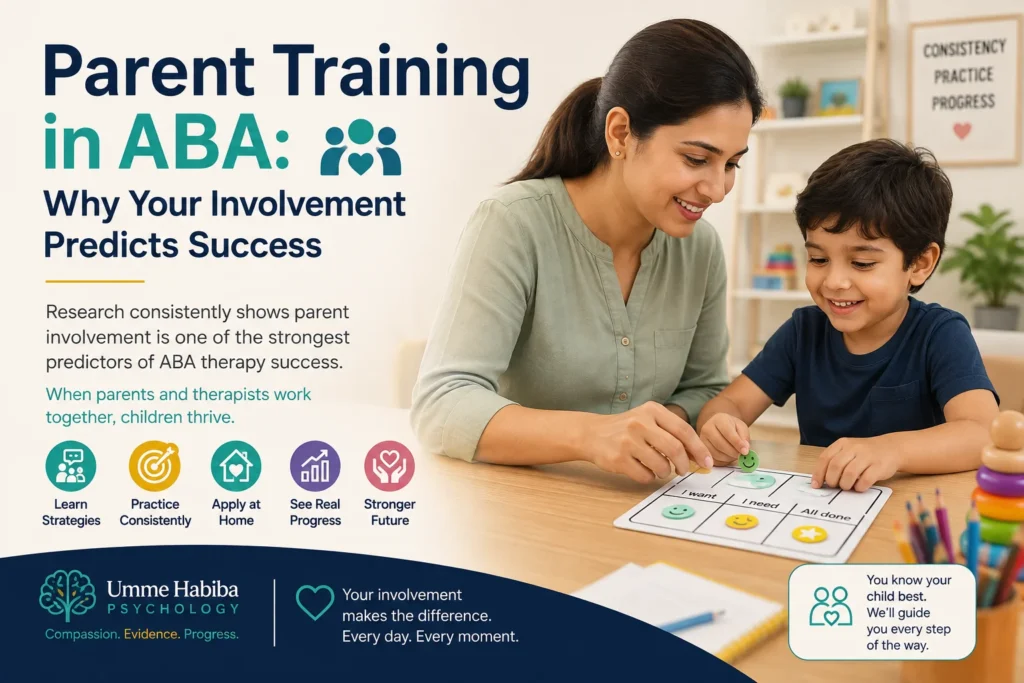
Research consistently shows parent involvement is one of the strongest predictors of ABA therapy success. Here’s what genuine parent training in aba actually looks like and why it matters so much.
Of all the factors that influence how well a child progresses in ABA therapy the provider’s qualifications, the number of hours, the specific techniques used one of the most consistently powerful, and most within a family’s direct control, is something surprisingly simple: how actively and consistently parents are involved. This isn’t a minor supporting detail. It’s one of the strongest predictors of long-term outcomes across the research on early intervention. This guide explains what genuine parent training actually looks like, why it matters so much, and how to make the most of it as a busy parent.
Why Parent Involvement Matters So Much
A child typically spends far more of their waking hours with family than in formal therapy sessions, even in an intensive program. If effective strategies only happen during those few structured hours a week, and something quite different happens the rest of the time, a child receives inconsistent, conflicting input which slows progress considerably compared to a child whose entire environment is reinforcing the same approach.
Beyond sheer hours, parents also have something a therapist, however skilled, doesn’t: the deepest, most continuous relationship with the child, across the full range of everyday situations mealtimes, sibling conflicts, extended family gatherings, bedtime where many of the most important skills actually need to be used. A therapist can build a skill in a structured session; a parent, equipped with the right strategies, is often the one who helps that skill become genuinely functional in real life.
What Parent Training In ABA Actually Involves
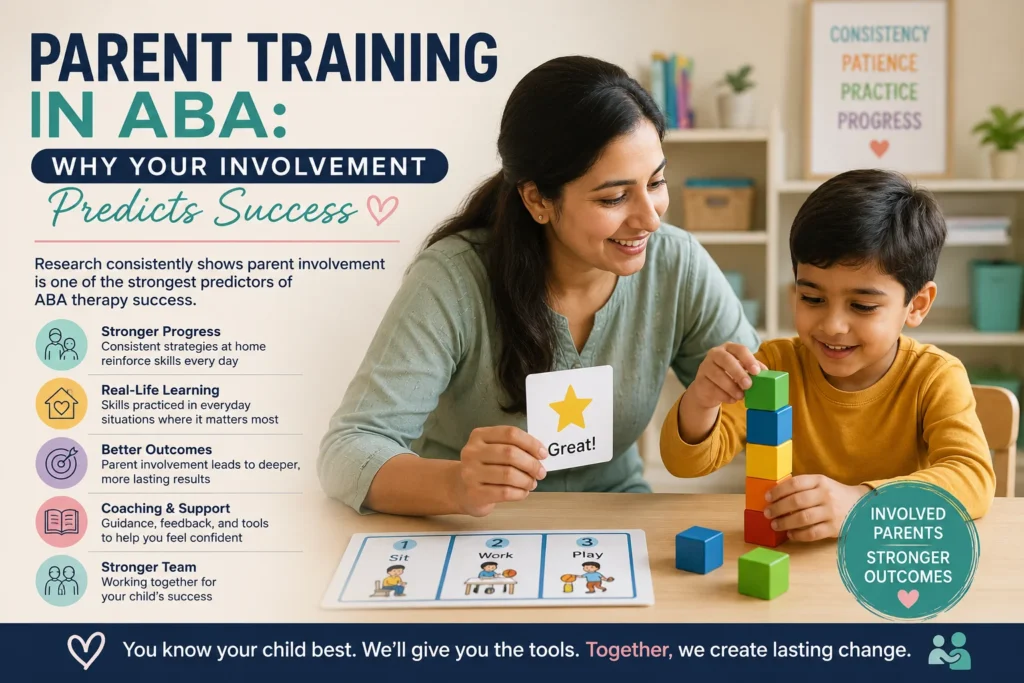
Genuine parent training goes well beyond a therapist occasionally mentioning “try this at home.” A structured parent training component typically includes:
- Direct coaching sessions, where a therapist explains and demonstrates specific strategies, then observes and gives feedback as the parent practices them directly with their own child
- Clear, specific guidance tied to current goals not generic parenting advice, but the exact strategies currently being used in therapy, translated into practical home application
- Regular check-ins to troubleshoot what’s working and what isn’t at home, adjusting the approach based on real feedback from the parent’s own experience
- Written or simple visual guides for key strategies, so parents have something to reference between sessions, rather than relying purely on memory
- Involvement of other key caregivers where relevant a second parent, grandparents, or household staff who spend significant time with the child
Common Barriers Parents Face and How to Work Around Them
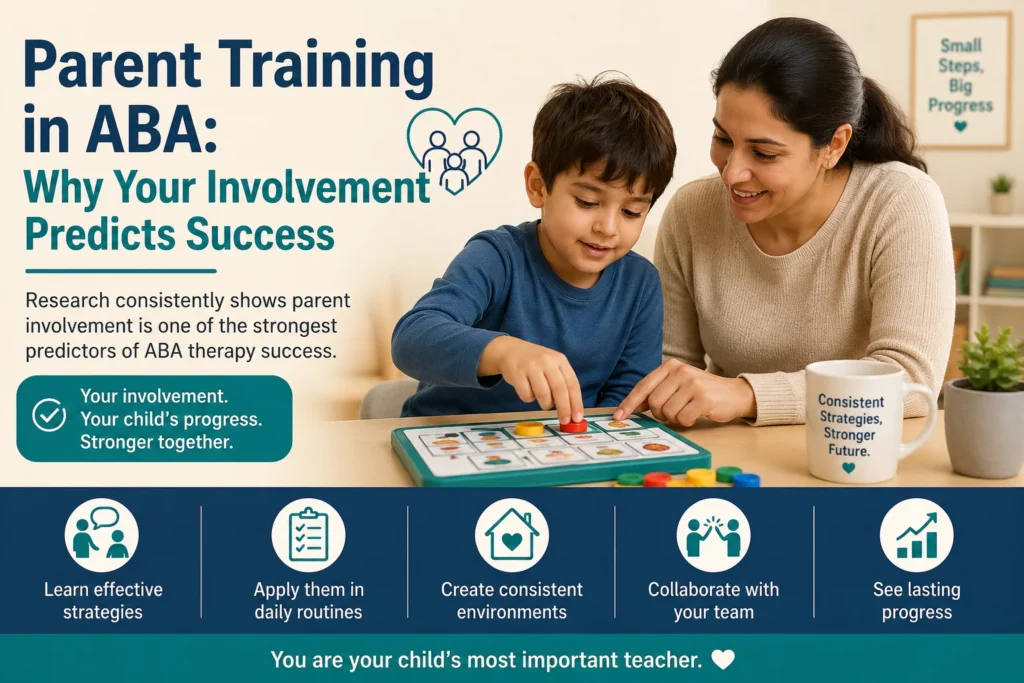
“I don’t have time to be a therapist too.” This is a completely reasonable concern, and it’s worth being clear: you’re not expected to run formal therapy sessions. Effective parent involvement usually means a handful of specific, consistent strategies woven into your existing daily routine not an additional, separate block of structured time.
“I try things but they don’t work the same way they do in therapy.” This is genuinely common, and it’s exactly why direct coaching (a therapist observing and giving feedback on how you’re actually implementing a strategy) tends to work far better than being told a strategy secondhand and left to interpret it alone. If your program doesn’t currently include this kind of direct coaching, it’s worth asking for it specifically.
“Other family members don’t follow the same approach.” As covered in our guide on ABA techniques at home, this is a real and common challenge in many households, and it’s worth having a direct, brief conversation with key caregivers about the two or three most important strategies to align on, rather than trying to get everyone fully trained on everything.
“I feel guilty that I’m not doing enough.” This feeling is extremely common and rarely proportional to reality. Consistent, focused effort on a handful of key strategies done reliably is more valuable than an unsustainable attempt to do everything perfectly, which tends to lead to burnout rather than better outcomes for your child.
What Good Parent Training Looks Like in Practice
A strong program will typically:
- Set aside dedicated time specifically for parent coaching, not just brief updates at the end of a child’s session
- Focus on a small number of specific, current priorities rather than overwhelming you with every possible strategy at once
- Adjust based on your specific family’s routine and constraints, rather than a generic template
- Genuinely welcome your observations and feedback about what’s happening at home, treating you as a source of important clinical information, not just a recipient of instructions
The Research Behind This
Long-standing research in early intervention consistently finds that programs including a structured parent training component tend to produce better, more durable outcomes than therapy delivered to the child alone, with parents as passive bystanders. This isn’t a minor detail buried in academic literature it’s one of the more robust, consistent findings in the field, and it’s part of why a good ABA program should treat parent training as a core component, not an optional add-on.
Making the Most of Parent Training as a Busy Parent
- Ask specifically what the top two or three current priorities are, so your effort is focused rather than scattered across too many goals at once
- Request direct coaching being observed and given feedback while practicing a strategy with your own child rather than only receiving verbal explanations
- Bring specific examples and questions to each session, based on what’s actually happening at home that week, rather than a general “how am I doing” check-in
- Be honest about what isn’t working, rather than saying things are going well to avoid feeling like you’re failing this honesty is exactly what helps a therapist adjust guidance to fit your real situation
For Overseas Pakistani Families
Parent training is particularly valuable for families managing therapy remotely, or combining periodic in-person visits to Lahore with ongoing life abroad. In these situations, parents often become the primary, consistent implementers of strategies day to day, with the therapist providing structured coaching and review during scheduled consultations which makes strong parent training not just helpful, but genuinely central to how the whole program functions.
The Bottom Line
Parent involvement isn’t a nice-to-have addition to ABA therapy it’s one of the most powerful, evidence-backed levers available to support a child’s progress, and it’s something entirely within a family’s ability to prioritise. If your child’s current program doesn’t include structured, direct parent coaching, it’s worth asking for it specifically this single addition can meaningfully change the trajectory of your child’s progress.