
ABA therapy teams involve several different roles and titles. Here’s exactly who does what so you know who’s in the room with your child and why it matters.One of the more confusing parts of starting ABA therapy is the alphabet soup of job titles: RBT, BCBA, BCaBA, sometimes a clinical psychologist overseeing the whole thing. Parents are often handed a treatment plan and introduced to a therapist without ever being told clearly what these letters mean, who’s actually qualified to do what, and who’s ultimately accountable for their child’s progress. This guide breaks it down plainly.
The Short Version
- BCBA (Board Certified Behaviour Analyst) designs the treatment plan, sets goals, analyses data, and supervises the team. This is the senior clinical role.
- RBT (Registered Behaviour Technician) delivers the day-to-day therapy sessions directly with your child, following the plan the BCBA designed, under regular supervision.
- BCaBA (Board Certified Assistant Behaviour Analyst) sits between the two able to implement and adjust parts of a plan under a BCBA’s supervision, with more training than an RBT but not full independent authority.
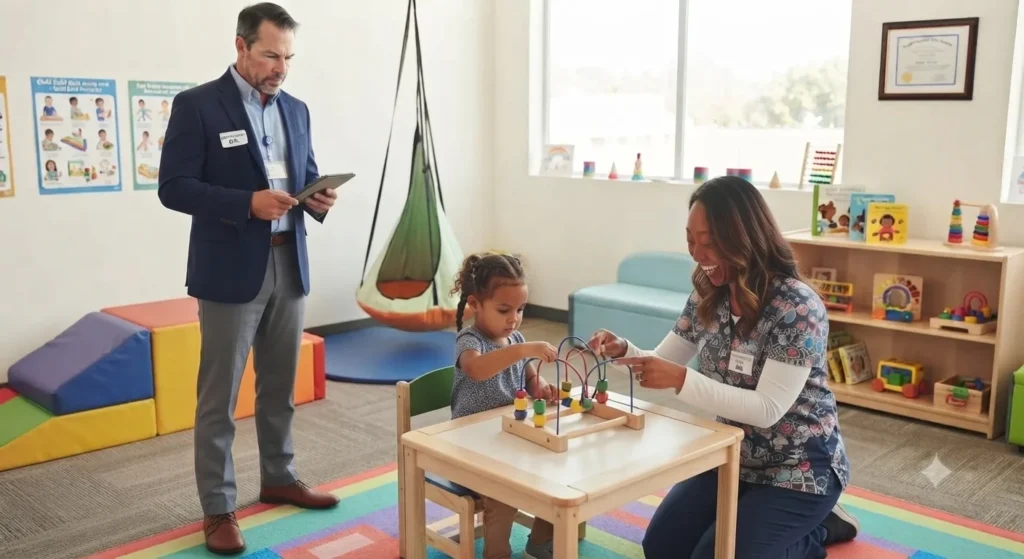
Think of it roughly like a hospital team: the BCBA is closer to the treating specialist who designs and oversees the care plan, while the RBT is closer to the trained nurse or technician delivering hands-on care every day, following that plan closely and reporting back.

What a BCBA Actually Does
A Board Certified Behaviour Analyst has typically completed graduate-level coursework specifically in applied behaviour analysis, supervised fieldwork hours, and passed a rigorous certification exam through the Behaviour Analyst Certification Board. Their responsibilities usually include:
- Conducting or overseeing the initial functional behaviour assessment
- Writing the individualised treatment plan, including specific, measurable goals
- Reviewing session data regularly to track whether the plan is working
- Adjusting the plan when data shows a goal isn’t progressing as expected
- Training and supervising the RBTs or technicians delivering direct sessions
- Communicating with parents about progress, setbacks, and plan changes
- Coordinating with other professionals involved in the child’s care, such as speech or occupational therapists
A good BCBA isn’t in the therapy room for every session that’s not the model but they should be actively reviewing your child’s data on a regular, defined schedule (commonly every 1 to 2 weeks) and available to discuss progress with you directly, not just through a technician relaying messages.
What an RBT Actually Does
A Registered Behaviour Technician has completed a required training program (typically 40 hours) and passed a competency assessment, but does not have the graduate-level clinical training of a BCBA. Their role is to:
- Deliver the actual teaching sessions with your child, following the specific procedures written into the treatment plan
- Collect data during every session recording what happened, how the child responded, and any relevant observations
- Implement behaviour reduction strategies exactly as designed by the supervising BCBA
- Flag anything unusual or concerning to the supervising BCBA promptly
An RBT should never be independently designing goals, changing the treatment approach, or making significant clinical decisions without their supervising BCBA’s direction. If a technician working with your child seems to be operating entirely on their own, without visible supervision or a documented plan, that’s worth asking about directly.
Why This Distinction Actually Matters for Your Child
This isn’t just administrative trivia. The quality and safety of ABA therapy depends heavily on this supervision structure functioning properly. Here’s why:
Consistency. A child benefits most from consistent, well-designed teaching. If an RBT is following a clear, well-supervised plan, your child gets the same effective structure across sessions and across different technicians, if more than one is involved.
Accountability. If something isn’t working — a goal has stalled, or a behaviour is getting worse instead of better — someone with the clinical training to analyse the data and adjust the approach needs to be actively involved, not just informed after the fact.
Ethical oversight. Supervision is also a safeguard. A BCBA’s oversight helps ensure the techniques being used are appropriate, positively-based, and genuinely in the child’s interest — not something an individual technician decided to try on their own.
Questions to Ask Any ABA Provider in Lahore
Before starting or continuing a program, it’s entirely reasonable to ask:
- Who is the BCBA (or equivalent senior clinician) supervising my child’s case, and what are their specific qualifications?
- How often does the supervising clinician review my child’s data and update the plan?
- Who will actually be delivering sessions, and what training have they completed?
- How often will I, as a parent, meet directly with the supervising clinician — not just the technician?
- If there’s a concern or a behaviour I don’t understand, who do I contact, and how quickly can I expect a response?
A provider who can answer these clearly and specifically is showing you a properly structured program. Vague or evasive answers are worth taking seriously as a warning sign.
The Reality of ABA Provision in Pakistan
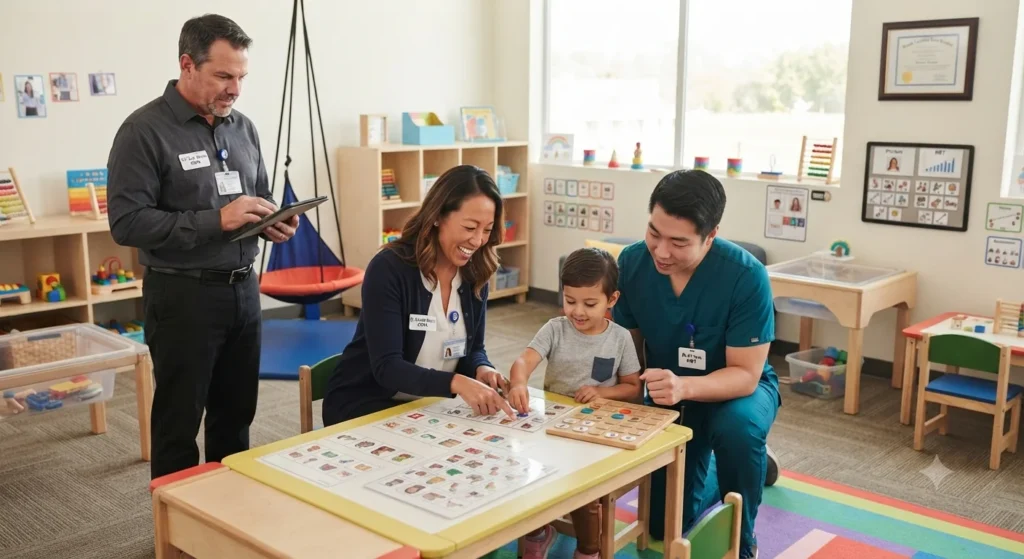
Formal BCBA certification, administered internationally through the Behaviour Analyst Certification Board, is still relatively rare in Pakistan compared to countries with a longer-established ABA industry. This means many providers here are led by clinical psychologists with specific ABA training and supervised experience, rather than a formally BCBA-certified professional which can still represent genuinely strong, well-supervised care, but it makes it especially important to ask directly about the specific training, supervision structure, and clinical background of whoever is overseeing your child’s program, rather than assuming a title guarantees a particular level of training.
What Good Supervision Looks Like in Practice
For families evaluating or currently in an ABA program, a few concrete signs of a properly supervised program include:
- You have met, and can contact, the senior clinician overseeing your child’s plan not just the day-to-day technician
- Session notes and data are documented consistently, not sporadically
- The treatment plan is reviewed and updated on a defined schedule, with visible changes over time as your child progresses
- The team communicates with each other for example, if your child also sees a speech therapist, there’s some coordination between the two, rather than each working in isolation
The Bottom Line
Knowing who’s actually responsible for what in your child’s ABA program isn’t just useful background information it’s one of the clearest, most practical ways to judge whether a program is properly structured. A well-run program will be transparent about these roles without you having to dig for the information.